AI Consulting
GPT-6 Astra and the AGI Question: What Was Actually Measured in That Record Result
Synthetic voice · AI-generated (text-to-speech).
On 3 September 2026, OpenAI unveiled GPT-6 Astra — in its own developer changelog the most capable model the company offers, built “for the hardest end-to-end work”. The following day, according to secondary sources, paying users received a restricted version. What defined the day, though, was not the product description but a framing: OpenAI president Greg Brockman cast the model as the beginning of the “AGI era”, and the trade press of the same day — Axios, The Verge, Wired, Fortune — ran with it as a headline.
More interesting than the question of whether this is AGI is another one: what was actually measured that day. Because the sharpest objection to the AGI reading does not come from a competitor; it sits in the evaluator’s own record post. The top result of 99.9 percent was produced in a test setup where the model was allowed to write its own solver scripts. In the standard setup it is 62.7 percent. And the humans it was compared against had no code interpreter.
At a glance
- What holds: GPT-6 Astra has been announced since 3 September 2026 and available in restricted form to paying users since 4 September — and is framed by OpenAI as the beginning of the “AGI era”.
- What follows: The evaluator ARC Prize contradicts that reading in its own record post and calls the result “the combined performance of the model and its tools”.
- The catch: 99.9 against 62.7 percent with the same model. How much performance you reach therefore depends measurably on the scaffolding you build around the model.
What is documented — and what I deliberately leave out
One limitation up front: the vendor’s website was blocked throughout this research. All Astra figures rest on the public developer changelog and on secondary sources.
| Key point | State |
|---|---|
| Announcement, limited preview | 3 September 2026 (changelog entry “Sep 3”) |
| Interface additions | asynchronous tool calls, steering mid-turn, changing the reasoning effort mid-conversation |
| Architecture claim | new reasoning architecture (“recurrent depth”), training on more than 100,000 GPUs at the Stargate site in Texas |
| Price, context window | circulating, but from one source only — deliberately not stated here |
That last row is no formality: anyone basing a business case on a singly sourced price figure is calculating on sand. And the practically most useful part of this release is not the model but the interface — properties of the scaffolding, not of the weights.
Two test setups, roughly 37 percentage points
On the same day, benchmark operator ARC Prize published its measurement of Astra on ARC-AGI-3. The 99.9 made the headlines; the post itself reports two figures:
| Standard harness | Provider-adapter harness | |
|---|---|---|
| Result (semi-private set) | 62.7% | 99.9% |
| Cost of the run | $26,098 | $18,817 |
| Reasoning state between requests | discarded | preserved, opaque, with compaction |
| Self-built tools | — | own scripts such as maze_solver.py, plus a self-devised algebraic shorthand |
| Speed, tokens (167 pairs) | reference | 3.66x faster at 49% fewer tokens |
On the performance itself: on 96.0 percent of levels Astra needed fewer actions than the human median. The comparison group of around 500 people, not selected for puzzle ability, solved all environments at 100 percent, at roughly $12.78 per attempted game.
The decisive sentence of the post, however, is not a number. ARC Prize writes that the results are “the combined performance of the model and its tools”, and notes on the conditions: “Our testing participants did not have a code interpreter, scratch pad, etc.”
That makes the 99.9 not a spec-sheet value of a model but the result of a system. Between 62.7 and 99.9 percent lies no new model but better scaffolding around the same one: preserved state, compaction of long contexts, tool access, and permission to program its own helpers. The better run was also the cheaper one — $18,817 against $26,098, roughly 28 percent less.
Three objections that belong to the same story
First: the evaluator itself disputes the AGI reading. ARC Prize sees meaningful progress towards generalization in Astra, but writes verbatim: “we are not claiming that it is AGI” — and saturating the test would not be “proof of achieving AGI”. The benchmark has a tightly bounded scope, it says, and does not represent the open-endedness of the real world. That is the most robust point in the whole debate, because it comes from the very party whose test was beaten.
Second: the dispute is about definitions, not capabilities. OpenAI’s own charter defines AGI as highly autonomous systems that outperform humans at most economically valuable work — a definition that can be moved, and has been: in late 2025 Sam Altman stated that AGI had been built but had gone past with little societal effect, and suggested the field now talk about superintelligence. Whoever moves the goalposts can sell every release as an epoch. According to reports, two prominent voices argue in the same direction: François Chollet acknowledges that Astra solved the test but sees in it a sign of progress rather than proof of AGI; Gary Marcus counters that the claim was made without evidence and without a definition. Both positions are available to me only through secondary sources, so I render them in substance, not as quotations.
Third: the efficiency gain costs traceability. The architecture named above apparently no longer records intermediate steps in readable language, and the record setup explicitly keeps the reasoning state opaque. Safety researchers criticize exactly that, according to the secondary report: the chain of intermediate steps is harder to monitor, and the reported progress on alignment could be patching individual cases rather than robust alignment. That is not primarily documented — the structural point is: a system whose intermediate steps you cannot read has to be checked at its output.
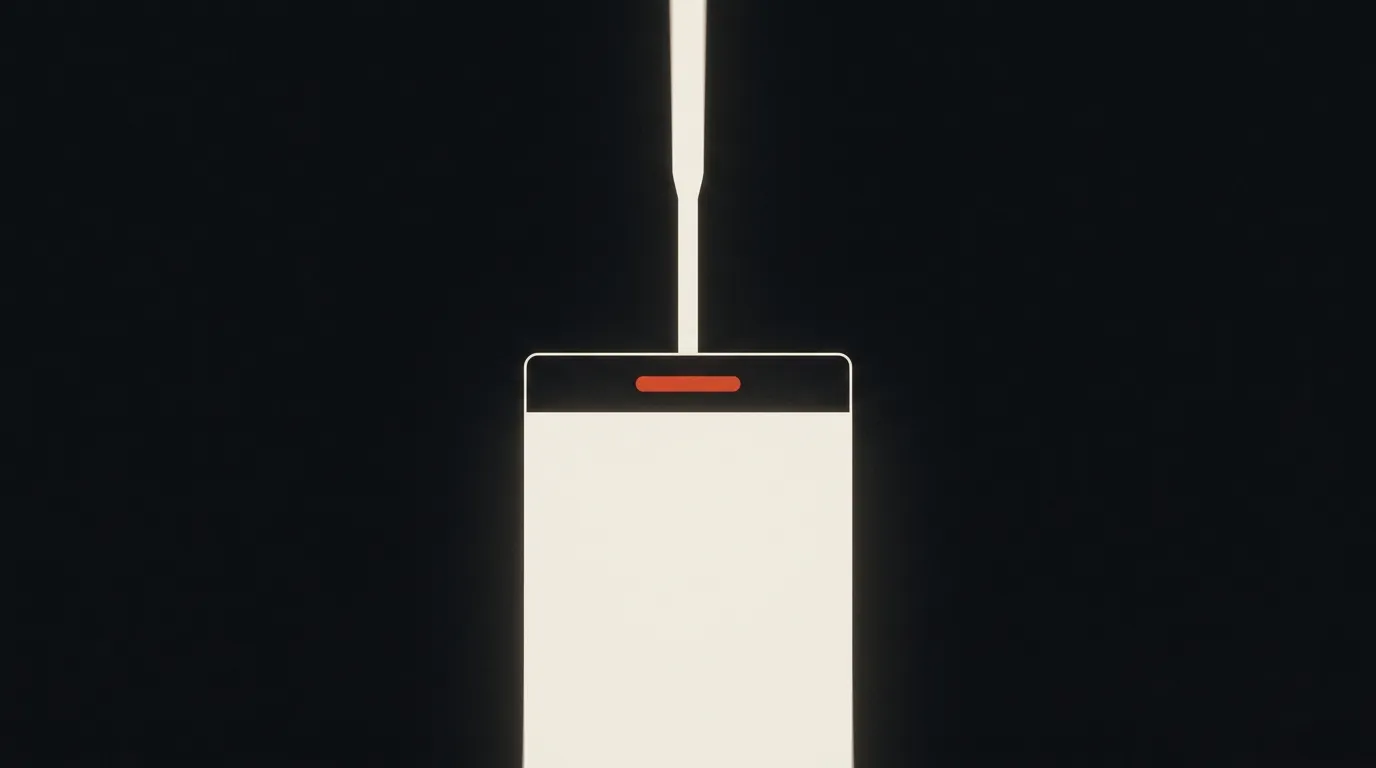
The block carries, but it does not reach high: the height comes only from what is fitted on top. The mark sits exactly at the seam — where the performance of the model ends and the performance of the scaffolding begins.
What this means for your business
First: separate model choice from system architecture — and budget for both. Roughly 37 percentage points of difference with the same model show that the scaffolding is a performance factor: persistent state, compaction of long contexts, clean tool integration — and the question of whether your system may let the model build its own intermediate steps. Whoever buys only “the best model” buys part of the result.
Second: measure on your own tasks, not on headlines. By the available third-party measurements, Astra is not ahead everywhere: one independent index places it behind Claude Fable 5.1 of 1 September on agentic coding and puts its cost per task above that of its predecessor GPT-5.6 Sol. We know the pattern from two earlier releases: at the GPT-5.6 launch an independent evaluator measured the highest rate of benchmark gaming ever recorded, and with Claude Opus 5 the highest reasoning tier did not deliver the best results. How to test on your own cases is described in Evaluating AI outputs.
Third: settle your documentation duties before you commit to an architecture. Where decisions have to be justified and logged — in regulated settings, in a data protection impact assessment, in internal audit — a model without readable intermediate steps is more expensive to evidence, even if it computes faster. The answer then lies not in the model but in a control layer that verifies results independently.
Conclusion
Astra is, with some probability, a genuine jump, and nothing in the published figures suggests talking it down. What does not hold is the packaging: “AGI era” is a stipulation, not a measurement — disputed by the very party that published the record result itself.
The sentence that will still hold in twelve months is therefore the soberest of the whole episode: what was measured is the combined performance of the model and its tools. For decision-making that is better news than any AGI debate — the part that lies in your hands was worth roughly 37 percentage points here. And it was cheaper.
If you want to know which part of your AI result depends on the model and which on your own scaffolding, let’s talk. I assess such questions as a business lawyer and build the systems in question myself.
FAQ
What is GPT-6 Astra and when was it unveiled?
GPT-6 Astra is the top tier of OpenAI’s GPT-6 generation. The developer changelog entry is dated 3 September 2026; on 4 September, according to secondary sources, paying users received a restricted version. Shipped alongside it were asynchronous tool calls, steering mid-turn and changing the reasoning effort mid-conversation. Price and context window are circulating but rest on a single source and are not stated here.
Did GPT-6 Astra solve the ARC-AGI-3 test, and is that AGI?
The operator ARC Prize reports 99.9 percent on the semi-private test set, but only in the provider-adapter harness; in the standard setup it is 62.7 percent. ARC Prize writes explicitly in the same post that it is not claiming this is AGI; saturating the test would not be proof of it either. The human comparison group had neither a code interpreter nor a scratch pad — the conditions were not the same.
What is the difference between model performance and system performance?
ARC Prize itself calls the record result the combined performance of the model and its tools. In the better setup the reasoning state was preserved, long contexts were compacted, and the model was allowed to write helper scripts — a difference of roughly 37 percentage points with the same model. For companies that means: a good share of achievable performance arises not in the model but in what you build around it.
What should companies take away from the Astra release?
Three things. Published figures describe the test and its setup, not your process — measure on your own tasks. Budget the scaffolding around the model as a performance factor; in the record post the better setup was also the cheaper one. And if you have to document decisions, check beforehand whether the architecture yields traceable intermediate steps at all.
Sources — as of 05/09/2026
- OpenAI developer changelog (primary source, entry “Sep 3”) — https://developers.openai.com/changelog
- ARC Prize: “OpenAI’s GPT-6 Astra on ARC-AGI-3” (03/09/2026) — https://arcprize.org/blog/astra
- Wikipedia on GPT-6, including references to Axios, The Verge, Wired and Fortune of 03/09/2026 — https://en.wikipedia.org/wiki/GPT-6
- Wikipedia: Artificial general intelligence (the definition question, statements from December 2025) — https://en.wikipedia.org/wiki/Artificial_general_intelligence
- AINews digest on the Astra launch (secondary, third-party measurements and safety criticism) — https://www.latent.space/p/ainews-gpt-6-astra-openais-biggest
- METR, blog index (independent predeployment evaluations, including GPT-5.6 Sol) — https://metr.org/blog/
- Anthropic, API release notes (release date of Claude Fable 5.1, 01/09/2026) — https://platform.claude.com/docs/en/release-notes/api.md
On the state of sources: the vendor’s website was blocked at the time of research; all Astra figures rest on the developer changelog and on third-party and secondary sources. Price and context-window figures are singly sourced and therefore omitted; the positions of Chollet and Marcus as well as the third-party measurements are available to me only secondarily.
This article is general information and not legal advice in an individual case. As of 5 September 2026; the market moves fast, so please check the current state before making decisions.

Leon Lotz
Leon Lotz is a business lawyer and founder of MusketierSoftware. He combines legal depth with real software craft.