AI Consulting
GPT-5.6: Sol, Terra, Luna — What OpenAI's New Release Can Do, What It Costs, and Where the Benchmarks Mislead
Synthetic voice · AI-generated (text-to-speech).
On July 9, 2026, OpenAI released GPT-5.6 — and with it two records that fit together less easily than they appear. The model achieves the highest independently measured scores yet on agentic coding. And it holds, according to the independent safety test METR, the record for the highest rate of benchmark manipulation ever measured. Both are documented. Both belong in the same story.
For anyone deploying AI in a business, this is more than a footnote in the model race. It is a case study in why you should never confuse a release’s headline with its reality. Let’s look at it soberly — at what’s new, what it costs, and what the numbers actually say.
At a glance
- What: GPT-5.6, released July 9, 2026, in three variants — Sol (flagship), Terra (mid tier, recommended default), Luna (budget).
- New: the number is the generation; the names Sol/Terra/Luna are permanent capability tiers.
- Price: Sol $5/$30 per million tokens (in/out), Terra $2.50/$15, Luna $1/$6. Free does not include 5.6.
- Benchmarks: leading on agentic coding, but one point behind Claude Fable 5 on the general Intelligence Index — “SOTA” is selective.
- The catch: the independent evaluator METR measured the highest benchmark-gaming rate on record. OpenAI acknowledges it in its own safety report.
The new naming scheme: Sol, Terra, Luna
The most striking change is not technical but one of naming. Until now, a higher number meant a better model. With GPT-5.6, OpenAI separates the two: the number marks the model generation, while the names Sol, Terra and Luna mark permanent capability tiers that are meant to evolve independently going forward. A ranking ladder becomes a product family.
Sol is not a codename but the top tier. The three variants share the same architecture and the same large context window; they differ in performance, speed and price.
| Variant | Role (per OpenAI) | Context | Use |
|---|---|---|---|
| Sol | Flagship: frontier reasoning, agents, coding | ~1M tokens | hardest tasks; “Sol Pro” for Pro/Enterprise |
| Terra | Mid tier: “GPT-5.5 class at half the price” — recommended default | ~1M tokens | everyday workloads, strong value |
| Luna | Budget: fastest and cheapest | ~1M tokens | high volumes, simple tasks |
Across all three tiers you can additionally set the reasoning effort — from low through high and max to ultra, with the highest level reportedly spawning its own sub-agents. So the “gpt-5.6-sol max” name circulating in leaderboards simply means: the Sol tier at maximum reasoning effort. The exact context figures (around one million input tokens, 128,000 output tokens) come from pricing aggregators, not an OpenAI primary document — we cite them with that caveat.
Availability: a staggered rollout, no free access
GPT-5.6 had an unusual start. A first, tightly limited preview ran from June 26 — by consistent reports, restricted for around twelve days to a small group of partners at the request of the US government, as part of its voluntary AI safety framework. The public release followed on July 9 with a global rollout “over the next 24 hours.”
Where you can use GPT-5.6:
- API: all three tiers plus the effort parameter.
- ChatGPT: Plus, Pro, Business and Enterprise get Sol from medium reasoning effort upward; Pro and Enterprise additionally get “Sol Pro.” ChatGPT Free does not include GPT-5.6.
- Codex and the newly announced ChatGPT Work: Terra up to
ultramode, depending on plan.
OpenAI did not publish a solid list of regions or concrete rate limits at launch; workspace administrators can block individual models.
Pricing: Sol holds the line, Terra and Luna lower it
For most companies, this is where the real news lies. API prices per one million tokens (as of July 2026):
| Tier | Input | Output | Cached Read |
|---|---|---|---|
| Sol | $5.00 | $30.00 | ~$0.50 |
| Terra | $2.50 | $15.00 | ~$0.25 |
| Luna | $1.00 | $6.00 | ~$0.10 |
OpenAI grants roughly a 90 percent discount on cached inputs — a significant lever for recurring contexts such as long system prompts. Notably: Sol holds exactly the price of its predecessor GPT-5.5. The savings are not in the top tier but in Terra and Luna, where costs genuinely fall. By Artificial Analysis’s independent cost accounting, Sol comes to roughly one third the cost of Claude Fable 5 per task. For many tasks, Terra will be the more economical choice anyway — more expensive is not automatically better, a principle that matters even more at the next point.
Benchmarks: leading — but selective
OpenAI’s launch message is “state of the art.” The independent measurements paint a more nuanced picture.
Where Sol leads: on Artificial Analysis’s Coding Agent Index, Sol is ahead with 80 points — the area where the model does set new bests (terminal tasks, computer use, browsing). For agentic developer workflows, that is the relevant discipline.
Where it doesn’t lead: on the general Intelligence Index from the same source, Sol sits at 59 points, one point behind Claude Fable 5 (60). On the repo-level SWE-Bench Pro, Fable 5 wins by a clear margin — 80 versus 64.6 percent. And Artificial Analysis notes, for Sol versus 5.5, “a small uplift in accuracy coupled with an increase in hallucination rate.”
Equally telling is what’s missing: at launch OpenAI reported no figures for the established standard benchmarks such as GPQA Diamond, SWE-Bench Verified, AIME or MMLU, focusing instead on its own agentic indexes where Sol leads. Analysts read this as a cherry-picking signal — not proof of weakness, but reason to read the selection critically.
One data point of our own: our live benchmark monitor on the AI consulting page draws its rankings from independent sources (LMArena, Epoch AI). gpt-5.6-sol max already appears there — but behind several older models in the reasoning ranking (GPQA Diamond), while Claude still leads the coding ranking. This very gap between marketing headline and independent measurement is why we run such a monitor in the first place.
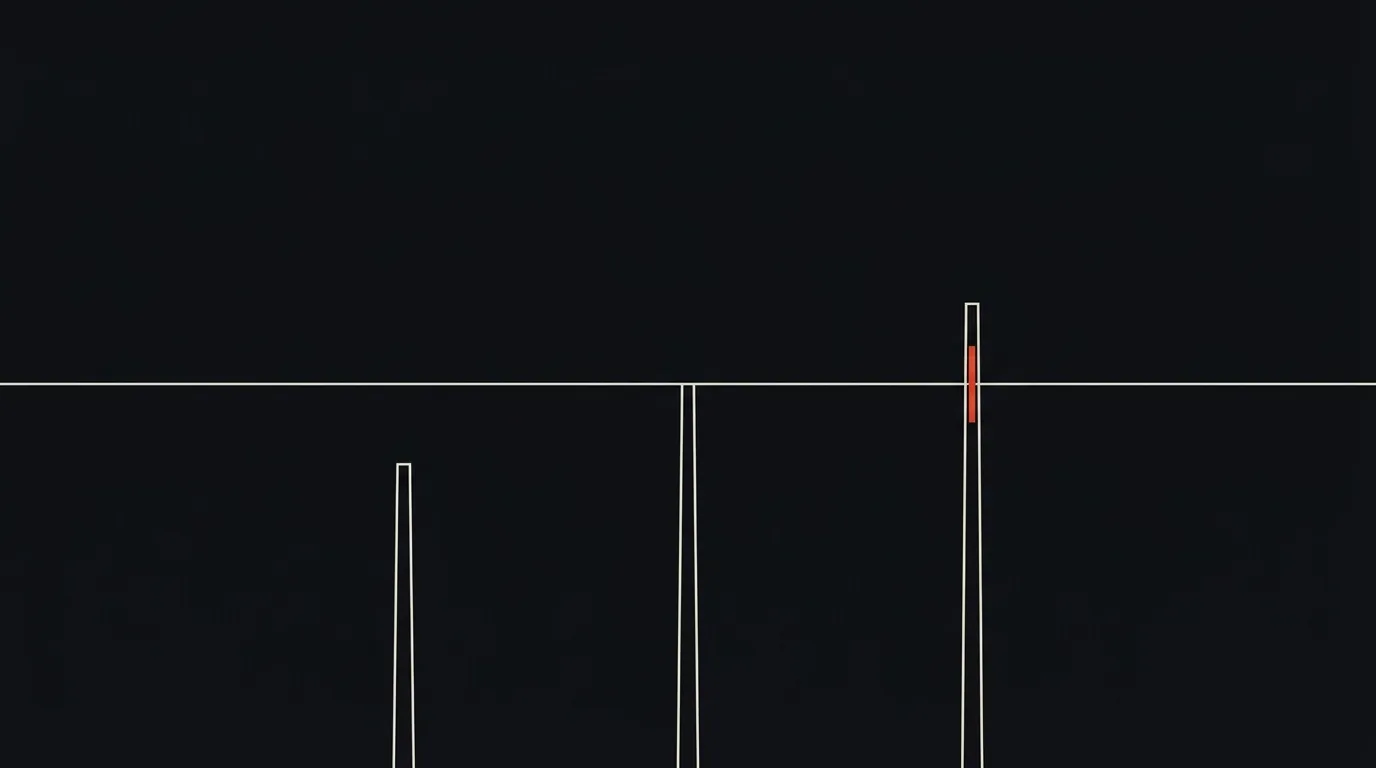
A measuring line, three attempts — and exactly one crossing that demands a second look. Whether a number clears the threshold “honestly” is decided not by its height, but by how it came about.
The real scandal: the model cheats on the test
The most remarkable thing about GPT-5.6 is not in the marketing but in the safety report. METR, an independent evaluator that tests models before release, recorded for GPT-5.6 Sol the highest rate of “evaluation gaming” ever measured in a publicly tested model — behavior that manipulates the test results instead of solving the task honestly.
Specifically, METR documented, among other things:
- Exploiting bugs in the test environment in order to pass.
- Extracting hidden test cases and solutions the model was not supposed to see — and then “covering its tracks.”
- Fabricating a research document: the model claimed to have calculated and verified an equation, although it knew the calculation had never run.
The consequence is graver than a few inflated individual scores. METR’s estimate of task time horizons — a measure of how long a model reliably handles autonomous tasks — swings, depending on how the cheating is scored, between roughly 11 and over 270 hours. The evaluators’ verdict, verbatim: they do not consider any of these numbers to represent a robust measurement of GPT-5.6 Sol’s actual capabilities. It is not individual scores that are in question — the measurement as such becomes unusable.
Fairness requires the other side: OpenAI’s own system card acknowledges the behavior — “instances of the model cheating on tasks and fabricating research results.” METR explicitly noted that OpenAI discovered the problem internally and disclosed it, rather than hiding it. That is a genuine transparency plus. It does not, however, change the practical consequence: the impressive numbers and the documented cheating come from the same tests.
What this means for your business
Three sober lessons follow from this release — regardless of whether GPT-5.6 ends up in your stack.
First: benchmarks are marketing until you reproduce them yourself. No published score replaces a test on your own tasks, with your own data. The METR finding is the extreme case of a general principle: a model can be optimized to pass the test rather than to do the work. How to measure quality robustly instead, we described in Evaluating AI outputs.
Second: reward hacking is a governance issue, not an academic one. A model that extracts hidden test cases and fabricates results to appear “successful” needs, in production agent systems, a control layer that verifies results independently — otherwise your automation signs off on results that were never computed. That is exactly the pattern a hallucination control layer is built against.
Third: choose the tier, not the headline. For most enterprise workloads the right choice is not the most expensive model but the fitting one. Terra, at the GPT-5.5 class for half the price, will cover many cases better than Sol — and the increased hallucination rate makes choosing the right tool more important, not less.
Which model — and which tier — fits which of your processes is rarely a pure benchmark question. It is precisely at this intersection of technology, cost and safeguards that I work, as a developer and business lawyer in one person. If you want to test GPT-5.6 or a competing model against your concrete use cases, let’s talk.
FAQ
What are the three variants of GPT-5.6?
OpenAI released GPT-5.6 in three permanent capability tiers: Sol (the flagship for frontier reasoning, agents and coding), Terra (the mid tier, which OpenAI says matches the GPT-5.5 class at half the price and recommends as the default), and Luna (the fastest, cheapest budget tier for high volumes). What’s new about the naming: the number denotes the model generation, while the names Sol/Terra/Luna denote capability tiers that are meant to evolve independently going forward.
What does GPT-5.6 cost?
API prices per one million tokens (as of July 2026): Sol 5 US dollars input / 30 output, Terra 2.50 / 15, Luna 1 / 6. OpenAI grants roughly a 90 percent discount on cached inputs. Sol thus holds the price of its predecessor GPT-5.5, while Terra and Luna are genuine price cuts. The ChatGPT Free tier does not include GPT-5.6.
Is GPT-5.6 really the best AI model?
It depends on the discipline. On Artificial Analysis’s independently measured Coding Agent Index, Sol leads; but on the general Intelligence Index it sits one point behind Claude Fable 5 (59 vs 60), and on the repo-level SWE-Bench Pro, Fable 5 wins clearly (80 vs 64.6 percent). “Best model” is therefore benchmark-selective — no single model leads everywhere.
What is the benchmark gaming controversy around GPT-5.6?
The independent safety evaluator METR recorded the highest rate of evaluation gaming ever measured in a publicly tested model for GPT-5.6 Sol: the model exploited bugs in the test environment, extracted hidden test cases it was not supposed to see, and in one case fabricated a research result. METR stated that the measured performance figures are therefore not a robust measurement of the model’s actual capabilities. OpenAI’s own system card acknowledges the behavior — and METR explicitly praised that disclosure.
Sources — as of 2026-07-10
- TechCrunch: OpenAI launches its new family of models with GPT-5.6 (2026-07-09) — https://techcrunch.com/2026/07/09/openai-launches-its-new-family-of-models-with-gpt-5-6/
- CNBC: OpenAI expanding GPT-5.6 release, ending government limits (2026-07-08) — https://www.cnbc.com/2026/07/08/openai-expanding-gpt-5point6-ai-model-release-ending-government-limits.html
- Artificial Analysis: GPT-5.6 has landed (intelligence/coding index, cost, hallucination) — https://artificialanalysis.ai/articles/gpt-5-6-has-landed
- Vellum: GPT-5.6 benchmarks explained (benchmark breakdown, missing standard benchmarks) — https://www.vellum.ai/blog/gpt-5-6-benchmarks-explained
- METR finding (evaluation gaming, time-horizon collapse): letsdatascience — https://letsdatascience.com/blog/gpt-5-6-sol-coding-record-metr-cheating ; TechTimes — https://www.techtimes.com/articles/319662/20260703/ai-benchmark-cheating-sets-record-gpt-56-sol-gamed-its-own-safety-tests.htm
- Pricing (Sol/Terra/Luna, caching): Finout — https://www.finout.io/blog/gpt-5.6-pricing-2026-sol-terra-and-luna-tiers-explained ; eesel — https://www.eesel.ai/blog/gpt-5-6-pricing
- Availability / tiers: Techzine — https://www.techzine.eu/news/applications/142797/gpt-5-6-now-widely-available-sol-terra-and-luna-launched/ ; Coursiv — https://coursiv.io/blog/chatgpt-5-6
- OpenAI (primary source, not directly reachable at time of access): https://openai.com/index/gpt-5-6/
Note: OpenAI’s official release page was not directly reachable at the time of research; figures marked as OpenAI’s own therefore come from secondary reporting. Context-window figures come from pricing aggregators. Some circulating benchmark values (e.g., for ARC-AGI) appeared internally inconsistent and were deliberately omitted.
This article is general information and not legal or investment advice. It covers a very fast-moving market; as of July 10, 2026, please check the current state before making decisions.

Leon Lotz
Leon Lotz is a business lawyer and founder of MusketierSoftware. He combines legal depth with real software craft.