AI Consulting
Efficiency versus Explainability: When a Model No Longer Writes Down Its Intermediate Steps
Synthetic voice · AI-generated (text-to-speech).
On 3 September 2026, OpenAI announced GPT-6 Astra and released it as a limited preview; the changelog promotes it as “our most capable model, built for the hardest end-to-end work.” A day later, a version restricted in its capabilities went public for paying users. The release itself and the AGI rhetoric around it I have sorted through separately.
More interesting is a statement about the architecture. Astra is said not simply to compute more, but differently: reporting names a reasoning architecture under the labels “recurrent depth” and “looped transformers” that partially obscures the path to the result. Where previous models laid down their intermediate steps as readable text, computational loops now run that cannot be extracted as language. This is not a footnote for safety researchers — it helps decide whether a system is usable in a process you will later have to justify.
At a glance
- What has been reported: GPT-6 Astra has been available since 3/4 September 2026; according to reporting, the architecture exposes the reasoning process only partly in readable form.
- What follows: Anyone who has to log, justify or account for decisions buys a documentation capability along with the model — or does not.
- The catch: A readable chain of thought is not yet a true justification, and the architecture claim does not come from a primary source.
What has been reported — and how solid it is
On this topic the quality of the evidence is itself part of the news:
| Item | Content | Evidence quality |
|---|---|---|
| Availability | 3 Sept 2026 preview, 4 Sept 2026 public in restricted form | high — vendor changelog plus a second source |
| Architecture | ”recurrent depth” / “looped transformers”; partly obscures the reasoning | medium — secondary sources only |
| Safety criticism | reduced monitorability of the chain of thought; alignment as patchwork (Nanda, Greenblatt, Carroll) | medium — industry digest |
| Price, context window | figures in circulation | not usable — single source, not findable in a second check |
So for a model marketed as a flagship product, not even the price and the context window could be confirmed reliably. I therefore quote no figures for them.
Measurements are circulating from the UK AI Security Institute, and they pull in different directions. The time horizon over which the model works without a readable chain of thought is said to be 30.9 minutes, against 3.6 minutes for its predecessor GPT-5.6 Sol; on long trajectories in the security domain, reasoning summaries were missing in up to 80 % of cases. A metric labeled CoT controllability, by contrast, stands at 93 % against 48 % — by its name a value in favor of the new model; what exactly it measures is not stated in the account available to me. Only the direction is solid: longer autonomous work, a readable trail less often.
The counter-movement matters more in practice, because it shows you have a choice. On 1 September 2026, Anthropic announced the Enterprise Frontier Safeguards — data is to sit in cloud infrastructure controlled entirely by the customer; the rollout happens in phases from autumn 2026, and until then eligible customers have a zero-data-retention option. Announced is not rolled out, however, and terms belong in a contract. On the thinking step itself, the same side goes the opposite way: in Claude Opus 5, thinking has been switched on by default since 24 July 2026, so the intermediate step arises as a storable artifact. Traceability has thus become a sales argument in its own right — how solid such promises are is something I have checked once before.
Whoever must justify needs a path
This is where the topic leaves safety research. A range of obligations does not require a result to be correct, but that it can be shown how it came about.
Logging. The KI-Verordnung (EU AI Act) requires high-risk systems to be technically capable of recording events automatically (Art. 12) and obliges deployers to retain those logs for at least six months (Art. 26(6)) — this part has been postponed to 2 December 2027 for Annex III systems. The GoBD (German rules on the proper keeping of electronic books and records), by contrast, already require process documentation today showing how a machine-supported process works.
Justifying automated decisions. If a decision with legal effect is taken without human involvement, Art. 22 DSGVO (GDPR) applies, and the data subject has a right to information about the logic involved (Art. 15(1)(h)). What “logic” means is contested; an explicit right to an explanation of the specific decision appears only in recital 71, not in the article text. For public authorities, § 39 VwVfG (Verwaltungsverfahrensgesetz — duty to state reasons for administrative acts) applies as well. What they share: “the model produced that output” is not a justification.
Accountability. Art. 5(2) DSGVO requires being able to demonstrate compliance with the processing principles — accountability means the burden of proof lies with the controller. The duty of supervision under § 130 OWiG (Gesetz über Ordnungswidrigkeiten — German regulatory-offences act) points the same way, as do the audit rights in any serious customer contract.
Two things are regularly conflated here. The transparency obligations of Art. 50 of the EU AI Act, applicable since 2 August 2026, require labeling — that AI was involved, that content is synthetic. They do not require a justification of the path to the result. Anyone who ticks the labeling box and considers traceability settled has merged two duties that have nothing to do with each other.
Three objections to my own thesis
First: a readable chain of thought is not a true justification. What a model outputs as a thinking step is another generated text, not the log of the computation — take a visible chain for proof and you have bought a more comfortable black box, not transparency.
Second: the evidence supports less than the headline. The architecture claim rests on secondary sources, the measurements come from an industry digest, and one metric points the other way. A procurement decision should still hold up if the architecture claim is later refined.
Third: documentability arises at the system level, not in the model. Input, prompt version, model identifier, timestamp, output, reviewer, change — you log all of that regardless of whether the model produces prose about itself. The conflict does not dissolve, it shifts: away from whether you can document, toward how much you have to build yourself.
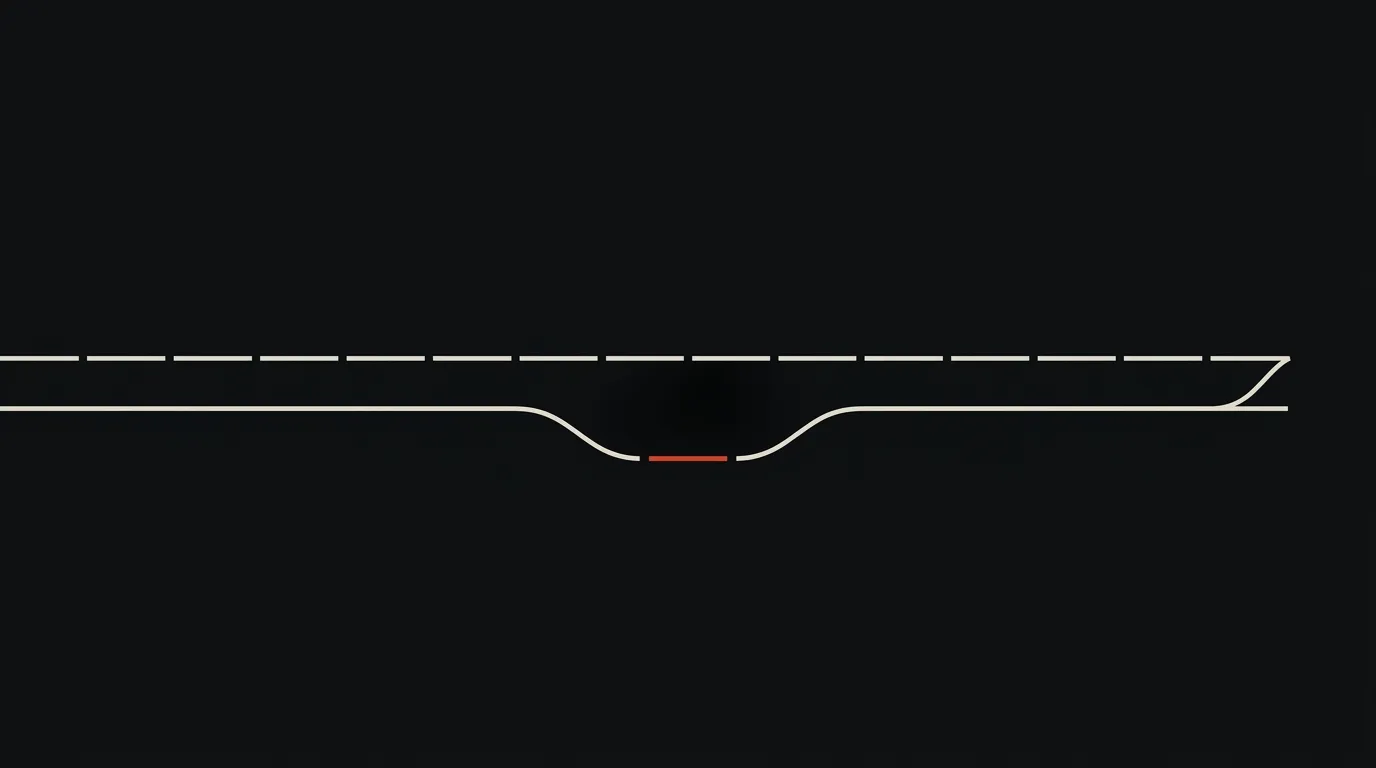
Two paths to the same result: one leaves countable intermediate steps, the other is faster and unreadable for a stretch. The mark sits where the trail breaks off — exactly where a supervisory authority would later look.
What this means for your model selection
Separate labeling from justification. Labeling is owed to the other party at the moment of use, justification afterwards: the first is satisfied by a notice, the second only by a trail — and often it is the second that nobody has thought about.
Add documentability as its own line in the evaluation. Alongside price, context window and latency, three questions belong in the assessment: does an intermediate step remain as a storable artifact? Who controls the infrastructure in which processing happens? What would the answer be if a supervisory authority asked about a single case tomorrow? Put the answers in writing — a documented selection decision is itself a piece of accountability.
Build the trail where you control it. A model that records nothing readable is not a disqualifier; it makes your control layer more expensive. What such a layer looks like, with logging and human review in the right place, I have written up separately. You pay that effort once — instead of permanently, as an open question.
Conclusion
The hard reading would be: faster models make compliance impossible. That is wrong. The soft reading would be: business as usual, you document around it. That is too comfortable. The middle reading is the right one — for the first time there is a flagship model on the market whose traceability of the computational path, according to reporting, decreases architecturally while performance rises. That turns a property people used to get for granted into a selection criterion. Two things I would not fool myself about: the evidence is thin — that belongs in the decision memo. And what holds up before a supervisory authority is not the model’s prose, but your own log.
If you want to know which evidentiary duties apply in your process and what that means for choosing a model, let’s talk. I assess such questions as a commercial lawyer and build the control layers in question myself.
FAQ
What does it mean that a model no longer records its intermediate steps in readable language?
According to reporting, GPT-6 Astra works with an architecture referred to as “recurrent depth” and “looped transformers”: instead of readable intermediate steps, internal computational loops run that cannot be extracted as text. This is only documented by secondary sources. Anyone who needs a readable trail may not get one.
Which obligations presuppose traceability?
Several, and they come from different directions. The DSGVO (GDPR) requires accountability for compliance with its principles (Art. 5(2)) and, for automated individual decisions, information about the logic involved (Art. 15(1)(h), Art. 22). The KI-Verordnung (EU AI Act) requires high-risk systems to be capable of automatic record-keeping (Art. 12) and obliges deployers to retain the logs for at least six months (Art. 26(6)) — that part has been postponed to December 2027. Add to this the process documentation required by the GoBD (German rules on electronic books and records), § 130 OWiG and your customer contract.
Is a visible chain of thought sufficient as a justification?
No, and that is the most important qualification on this topic. A thinking output is another text produced by the model, not a log of the computation that led to the answer — it can sound plausible and still not be the path actually taken. It is a review anchor for humans, but it replaces neither your own logging nor human oversight.
What should we look at specifically when selecting a model?
Add documentability as its own line in the evaluation, alongside price, context window and latency. Does an intermediate step remain as a storable artifact? Who controls the infrastructure in which processing happens? And what do you log yourself, independently of the model? The last question matters most, because its answer lies entirely in your hands.
Sources — as of 09/09/2026
- OpenAI Developer Changelog (entry of 3 September 2026) — https://developers.openai.com/changelog
- Encyclopedia entry on GPT-6 (rollout, architecture; secondary) — https://en.wikipedia.org/wiki/GPT-6
- Industry digest on the Astra release (AISI figures, safety criticism; secondary) — https://www.latent.space/p/ainews-gpt-6-astra-openais-biggest
- Anthropic on Fable 5.1 and Mythos 5.1 (Enterprise Frontier Safeguards) — https://www.anthropic.com/claude-fable-and-mythos-5-1
- Anthropic on Claude Opus 5 (thinking on by default) — https://www.anthropic.com/news/claude-opus-5
This post is general information and not legal advice in an individual case. The architecture claims about GPT-6 Astra rest on secondary sources only; as of 9 September 2026.

Leon Lotz
Leon Lotz is a business lawyer and founder of MusketierSoftware. He combines legal depth with real software craft.